According to the dictionary, untrodden
means “(of a surface) not having been walked on” (Google search of “untrodden"). With that, I want to try and take it further
and use the idea of “untrodden ways” as a suggestion for Lucy’s virginity or
purity. If she “dwelt among the
untrodden ways”—the untrodden ways being a lifestyle rather than geographical
location—then she lives a life in a body that hasn’t been walked on, or
altered, or made impure. This idea is
further pushed along when he writes; “A Maid who there were none to praise/And
very few to love” (3-4). So, if Lucy
does really live in inaccessible areas, there is no one to love and therefore
no way for her to become impure. She
also lives; “Beside the springs of Dove” (2).
The dove is often a symbol for peace.
Wordsworth is really idealizing Lucy and their love here, as she lives
in a peaceful place with no one to truly love her like he does.
Wordsworth takes
ownership over Lucy and his love for her with this poem. In the final stanza he says; “She lived unknown,
and few could know/When Lucy ceased to be” (9-10). By stating that he noticed her absence right away, he is establishing
a very clear and special connection between him and Lucy that no-one else is
capable of having but himself. He
further strengthens this connection and claims more ownership over Lucy when he
says; “But she is in her grave, and, oh,/The difference to me!” (11-12). With this final revealing of Lucy’s death,
Wordsworth is implying that no-one else will ever be able to love her or have
her like he did, making her eternally his.
This last line can also be taken
back when rereading the poem. With the
idea of Lucy as dead, the “untrodden ways” and “springs of Dove” can be seen as
heavenly images. This could be a way of
saying that Lucy has always and will always live in heaven, or in an
unreachable place that only Wordsworth can get to. So, if Lucy has always been in heaven and
continues to be so, it could imply a relationship with her that continues after
death. It doesn’t necessarily imply
sexual relations that continue post death, but does suggest an eternal love
between Lucy and Wordsworth, if not a continued love of Lucy post death or
strange obsession with her in her “untrodden” and unreachable state.
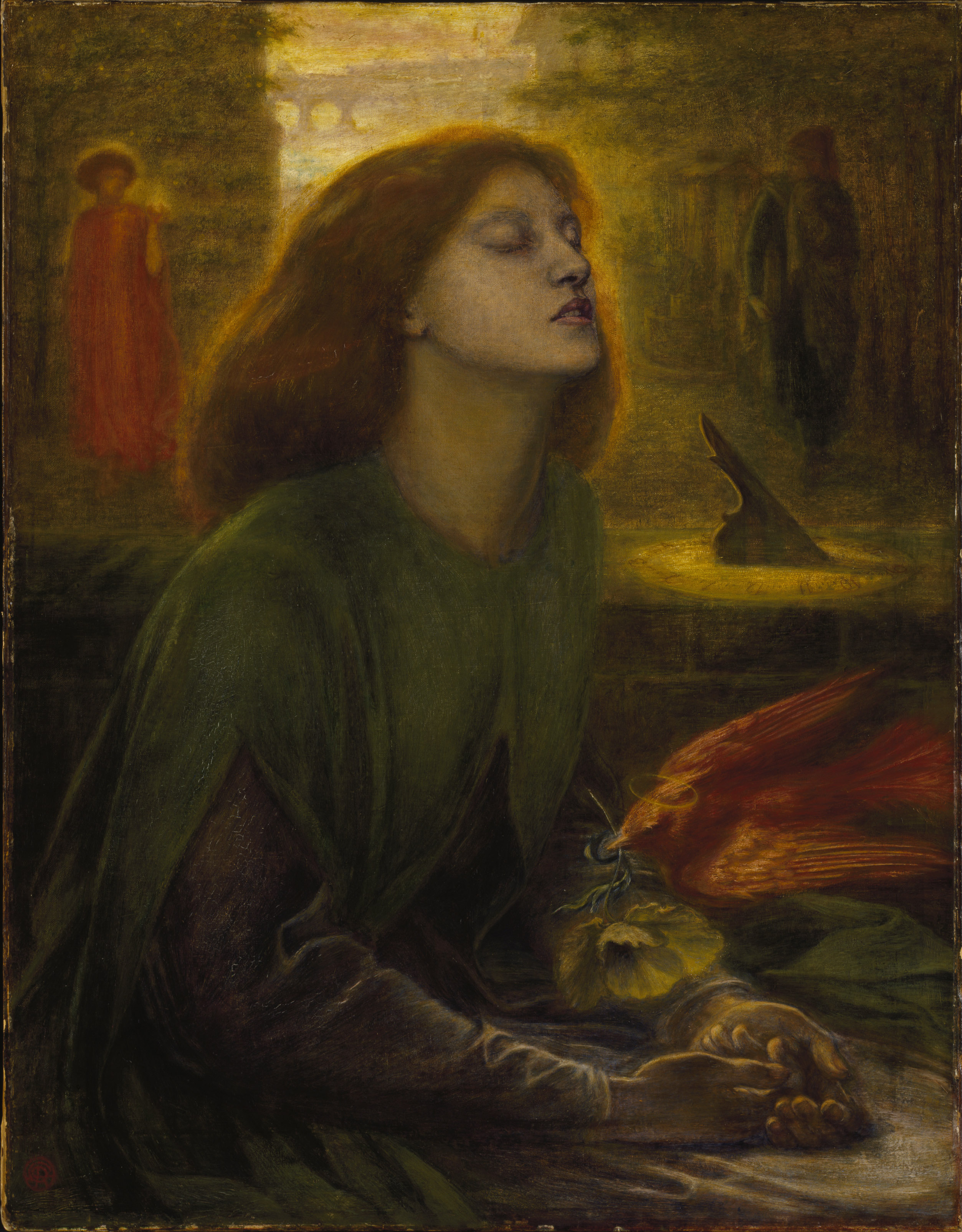
Dante Gabriel Rossetti's painting "Elizabeth Siddal." It's a painting of his wife, who had recently died. Its idealization of her beauty and heavenly surroundings reminds me a lot of Wordsworth's Lucy poems and the general obsession with dead women.
https://upload.wikimedia.org/wikipedia/commons/c/cf/Dante_Gabriel_Rossetti_-_Beata_Beatrix,_1864-1870.jpg

No comments:
Post a Comment