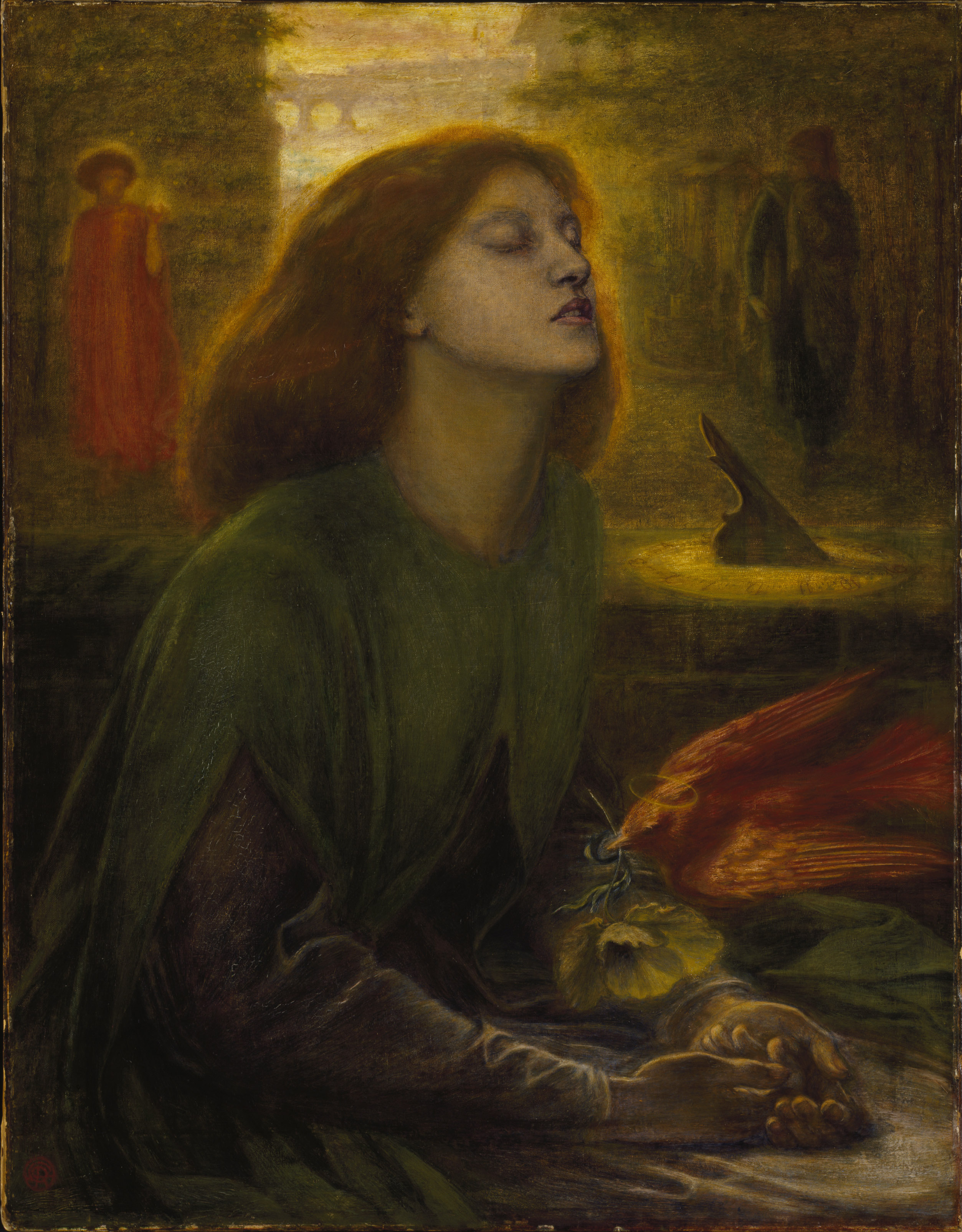
Transgressive women are often labeled “insane” in order to
contain them. These women have historically been incarcerated or lobotomized.
It is popular to this day to tell a woman she is “crazy” when she is upset by a
man or acting as aggressively as a man. And so it goes with “Juana” by Felicia
Hemans. In this poem, a woman neglected by her husband stays mourning by his
corpse for days, insisting he will awake. While it may be tempting to conjure
up the image of Emily and the corpse of Homer Barron, in “A Rose for Emily” by
William Faulkner, this is not a just comparison. Emily was a transgressive
woman who won. Emily murdered her lover and got away with it−she
was the perpetrator, not the victim. Juana on the other hand was a woman and
ruling queen, neglected by her husband. After his death, she mourned by his
side hoping that he would awake and fall in love with her again. This is not
the story of a mad necrophiliac−this is the story of an abused woman
facing the knowledge that she will never be treated with love by her abuser.
In real life Juana of Aragon, Queen of Castile was a queen
in her own right. As the throne passed through blood, her father, Ferdinand II
of Aragon was not the successor to the throne-she was. Therefore her father and
her husband, Philip the Handsome, went to great lengths to try to secure the
position for themselves, and dethrone her. One of their tactics was labeling
her as insane. Both men even minted coins with their names on them in order to
try to gain power. Juana and her husband were initially deeply in love.
Therefore, when he was shown to be philanderous, she was devastated. Juana and
Philip would fight, and then her husband would punish her by ignoring her for
days at a time. Occasionally their arguments would turn violent. When Philip
fell ill, there were suspicions that Ferdinand II poisoned him. Juana cared for
Philip as he died. The rumors that Juana stood by Philip’s corpse for days were
invented, and her father used them to finally take her place on the throne.
It is important to note the characters of this poem: the
narrator, the dead husband, Juana, and an ambiguous “they.” The “they” function
as those who wish to bring the body to rest, the narrator passes on Juana’s
dialogue and narrative, and the dead king simply rests. The most agency in the
poem is given to the narrator. In Felicia Heymans poem the narrator emphasizes
Juana’s insanity rather than its cause. Here are a few descriptions of Juana:
“on her wan cheek no beauty dwelt and in her garb no pride,” she is a
“dreamer,” and has a “strange resplendence” meaning immaturity (l10-11).
Therefore the narrator describes Juana as unattractive, unkempt, and childlike.
Juana is a “dreamer” also meaning that she is living in dreams rather than
reality. The narrator reduces a queen to the state of a day dreaming child.
Conversely, the narrator describes the dead husband as looking, “like a hunter
or a chief struck down” as “majestic” and “proudly glittering in royalty’s
array” (l6-8). This narrator portrays the dead, decaying husband as more
beautiful and strong than his living, ruling wife. I also wonder whether the
narrator would have called Juana by only her first name had she been a king
mourning over his dead queen.
Juana is given little
voice in this poem. The only words she speaks are regarding her husband, and
all we know of her is in reference to her husband. She speaks of his “brow so
proudly beautiful” and of how “surely that humble patient love must win back
love at last! (l22,32). We are shown her regard for her husband, that he did
not love her, and that she is distraught over the knowledge that know she will
never win back his love. What is missing is her complicated tragedy. The lack
of love from her husband was a tragedy, but it was further complicated by the
fact that her father and husband were wrestling over her crown. The two men
closest to her were tarnishing her name for money and power. The accusations of
insanity were pushed on Juana even before the death of her husband. In fact,
her father and husband once allied themselves in order to sign a treaty that
would declare her insane. The men in her life used these accusations in an
attempt to control her crown, and in real life her father succeeded after the
death of her husband.
I believe the poem is beautifully written, but it is tragic
that it passes on rumors that subverted a powerful woman. This poem
retells history as men told it. In reaction to this poem I have written a
poetic response, hoping to be more sympathetic to her character, and include
important details of her Queen-hood:
For Juana
“Visit me at night”
you begged,
“the bruise of an empty bed
is worse than my cold bruised
cheeks.”
A Queen cannot rule without men,
but you did, and look where that
got you.
Your husband loved the petty chase,
your father loved your crown.
“She’s unfit to rule,” they said,
and minted themselves a coin.
He’d punish you
by leaving your chamber for days;
And the two of them
pulled on the babe inside o’ you.
When your husband died,
we were sure it was your father;
and you’d waited so long for him to
love you,
and now he’d never love you.
You stayed with him,
while the fever overtook his naval.
You stayed until his eyes looked at
you
with more intensity than they ever
had before.
Those eyes never closed
and you felt seen for the first
time.
“This, this is love,” you said,
and would not leave,
could not believe that this was
the only love you’d get.
So you waited, as you waited in
life,
and as I’m sure you wait in death.
 |
Photo: https://en.wikipedia.org/wiki/Joanna_of_Castile
Sources: https://en.wikipedia.org/wiki/Joanna_of_Castile
http://madmonarchs.guusbeltman.nl/madmonarchs/juana/juana_bio.htm |